Wednesday, November 3, 2010

Pumpkins

"May Jack-o-lanterns burning bright
Of soft and golden hue
Pierce through the future’s veil and show
What fate now holds for you."
 
~Author Unknown

I don't know about you, but every year I look forward to seeing pumpkins everywhere I turn: piled in grocery store aisles and sitting on porches carved up into Jack-O-Lanterns. I eagerly await biting into pumpkin pies, muffins, and bread. I even have visions of pumpkin lattes dancing in my head. I can't wait to head off to the pumpkin patch and look out over a sea of bright orange pumpkins (not to mention the hot apple cider, hay rides, and corn mazes)!!

There have been so many gorgeous pumpkin shots being contributed to Tiny Treasures that I couldn't resist sharing a few here today:


Wednesday, July 21, 2010

Treasures of the Heart

 
"The greatest treasures are those invisible to the eye but found by the heart."
~ Author Unknown

The sweet, lovely and talented Tracey Clark of Shutter Sisters asked if I would be an honorary sister and guest blogger. They thought I would be a perfect fit seeing as though their word of the month for their One Word Project is Treasure.

My post is up today! Be sure to check it out :)

Remember my first post? Once again, Cory and I were out together (this time it was at the Woodburn Tulip Festival) and we stumbled across another pair of kissing salt and pepper shakers. I knew they had to be mine.

Saturday, May 15, 2010

"Be like a flower and turn your face to the sun."


Most of us know the old adage, “April showers bring May flowers.” In 1557 a gentleman by the name of Thomas Tusser compiled a collection of writings he called "A Hundred Good Points of Husbandry." In the April Husbandry section he wrote,"Sweet April showers do spring May flowers." This poem represents many things. The coming rain and sunshine make flowers grow and spring to life during these months. The most unpleasant of things can bring about pure joy. I believe that is something we face daily: getting through the hardships of life, to grow together and as individuals, and to face the beauty after the storm.

May is also a time in which we celebrate our mothers. The traditional practice of honoring Motherhood is rooted in antiquity; societies tended to celebrate Goddesses and symbols rather than actual Mothers. Only in the past few centuries did celebrations of Motherhood develop a decidedly human focus. Now, on Mother's day, it is common for Mothers to be lavished with presents (flowers being an extremely popular choice) and special attention from their families, friends and loved ones. This year I gave my mother a bag full of old fashioned candies (including Boston Baked Beans, Chico Sticks, Wax Bottles, Mars Bars, Abba-Zabba Bars) to remind her of when I was born. She always tells me stories about how she was addicted to Snickers and Abba-Zabba Bars when she was pregnant with me. Cory and I were walking around downtown Portland's much talked about 23rd Street when we came across "Northwest Sweets." It's new to the area so we had never been inside before. It's filled with old fashioned candies and confections made by the owner (I highly recommend the Buddha's delight caramels... DELICIOUS). 

Another flower filled event that to look forward to is the Woodburn Tulip Festival at the Wooden Shoe Tulip farm here in Oregon. My grandparents live in Woodburn and I have been seeing an Acupuncturist/Chiropractor in the area and saw all these signs that the festival was taking place. I told Cory that we might as well go after one of my appointments and take some pictures before it came to a close for the year. We were blown away at the remarkable beauty before us. It was a sea full of tiny treasures. I couldn't believe I had lived so close to such a gorgeous place my entire life and had never been before. I can't wait for next year!


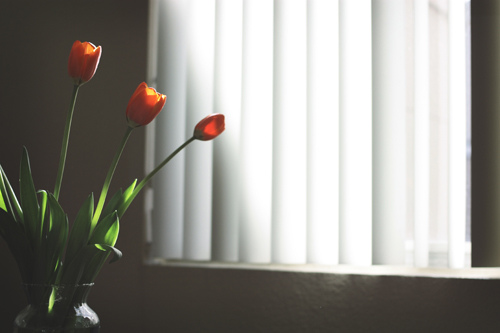
I leave you today with some fabulous floral photographs from a few of the many talented contributors at Tiny Treasures (we have nearly 700 members, wow!!). Hopefully they inspire you to stop and smell the roses...


Monday, April 5, 2010

Easter Spells Out Beauty...


"Easter spells out beauty, the rare beauty of new life." 

~ S.D. Gordon

I remember when I was a little girl, I would wake up early on Easter morning and wander out into the living room to discover a new Easter bonnet, tights and dress to wear to church and an Easter basket filled with rabbit and egg shaped chocolates, marshmallow Peeps, and other tiny treats (one year my parents even surprised my brother and I with new bikes (mine had silver streamers coming out of each handle and a pink basket with Snoopy on the front)). After church we would go to my Grandparents' house (my dad's parents) where there would be more Easter baskets waiting for my cousins and me, an Easter egg hunt in the backyard, and a dinner of honey-baked ham, potatoes gratin, and buttered rolls. 

I'm older now and my parents no longer indulge my brother and me with Easter treats. I no longer get new white tights or a basket filled with my weight in sugar. But we still spend the holiday with my dad's side of the family (usually at my Aunt Connie and Uncle Jeff's home instead of at my Grandparents' home) and enjoy our traditional feast. 

This year, Cory and I were both a bit under the weather so we were unsure if we were going to be able to participate in this years celebration. But we decided to put on our happy faces and give it a go. I'm so glad we did. We got to help hide the candy-filled eggs and watch the mostly smiling faces of my younger cousins as they raced to find the treats that the "Easter Bunny" hid for them (sometimes there are tears and fights due to one finding more eggs than the other, which, in a way, is traditional too). My cousin Maya even made me a special gift (a pillow that she picked out the fabric for and sewed all by herself specifically for me!) that I will treasure always. She will also create drawings and then run up to her mom and ask,"Is this as good as Jade did at my age? (I made all the artwork that hangs in her room and in her brother's room and their mom and dad also display a few of my paintings in their dining room so she knows how much I love making art). My cousin Alex raced up to me as soon as I entered the house and gave me a massive hug and was delighted that we both were sporting a fauxhawk hairdo. It's such a blessing to know that my younger cousins look up to me and love me so much, especially since I don't get to see them nearly as much as I would like to. 

Of course, it's a holiday, so Cory and I baked cupcakes and dressed up (it has become part of our tradition that just him and I share).

The exact origins of this religious feast day's name are unknown. Some sources say that the word Easter is derived from Eostre (also know as Ostara), a Teutonic (Germanic peoples) goddess of spring and fertility. Other accounts trace Easter to the Latin term hebdomada alba, or white week, an ancient reference to Easter week and the white clothing donned by people who were baptized during that time. 

The Bible doesn't mention a long-eared, short-tailed creature who delivers decorated eggs to children on Easter Sunday, nevertheless, the Easter bunny has become a prominent symbol of the holiday. The exact origins of this mythical mammal are unclear, but rabbits, known to be prolific procreators, are an ancient symbol of fertility and new life. Some sources believe the Easter bunny first arrived in America in the 1700s with German immigrants who settled in Pennsylvania and transported their tradition of an egg-laying hare called "Osterhase" or "Oschter Haws." Their children made nests in which this creature could lay its colored eggs. Eventually, the custom spread across the U.S. and the fabled rabbit's Easter morning deliveries expanded to include chocolate and other types of candy and gifts in decorated baskets in lieu of nests.

Eggs have long been associated with Easter as a symbol of new life and Jesus' resurrection. Decorating eggs for Easter is a tradition that dates back to at least the 13th century. One explanation for this custom is that eggs were formerly a forbidden food during the Lent, so people would paint and decorate them to mark the end of the period of penance and fasting, then eat them on Easter as a celebration.

Did you know that Easter is the second best-selling candy holiday in America after Halloween? Among the most popular sweet treats associated with this day are chocolate eggs, which date back to early 19th century Europe. Another egg-shaped candy, the jelly bean, became associated with Easter in the 1930s (the jelly bean's origins reportedly date all the way back to a Biblical-era concoction called a Turkish Delight). For the past decade, the top-selling non-chocolate Easter candy has been the marshmallow Peep (the original one was the yellow chick).

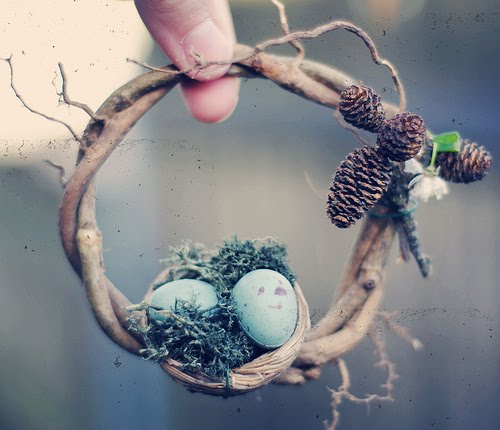
I hope you all had as lovely a holiday as I did. I leave you today with I a bit of Easter joy and inspiration from some of the contributors at Tiny Treasures (I hope you come take a look at the group to see all the rest of the fabulous Easter treasures).


"Eggs"  

 "..."


Tuesday, March 9, 2010

Spring Arose...


And Spring arose on the garden fair,
Like the Spirit of Love felt everywhere;
And each flower and herb on Earth's dark breast
rose from the dreams of its wintry rest.
 
~Percy Bysshe Shelley, "The Sensitive Plant"

*Sigh*... Spring. So many things to experience and look forward to during this cheerful season.

The sun comes out of hiding and begins to warm our faces once again. The first official day of Spring (also known as the Vernal Equinox) is on March 20. It is the point at which the sun crosses the celestial equator from south to north. This signals the beginning of Spring in the Northern Hemisphere. It has long been a significant event in the lives of agricultural peoples as it symbolizes nature's regeneration, fertility, growth and bounty. The word equinox comes from Latin and means "equal night". On this day, night and day each last twelve hours.
To pagans it's a time for joy called forth by the resurrection of the "Light of the World" (sun god) from the underworld of the winter, from where he arose to join his goddess Eostre. 

Eggs begin to hatch. Eggs play an important role in festivities throughout the world. According to folklore, the vernal equinox is the one time of the year that eggs can be stood on end. Earth and nature are said to be in harmony if an egg can be balanced on its end during the equinox, at the very point in time, when day and night are also in balance. People are preparing for Easter (be prepared for a post on this holiday next month) and part of the celebration includes dyeing and decorating eggs.They even color eggs in Iran to celebrate the Spring. Z Budapest in Grandmother of Time says that eggs were dyed red (the color of life) on the Festival of Astarte (March 17). The beautifully decorated eggs from the Ukraine (pysanky) are covered with magical symbols for protection, fertility, wisdom, strength and other qualities. They are given as gifts and used as charms.

Flowers begin to bloom. Seeds are like eggs: while eggs contain the promise of new animal life, seeds hold the potential of a new plant. In ancient Italy during the Spring, women planted gardens of Adonis. They filled urns with grain seeds, kept the in the dark and watered them every two days. This custom persists in Sicily. Women plant seeds of grains — lentils, fennel, lettuce or flowers — in baskets and pots. When they sprout, the stalks are tied with red ribbons and the gardens are placed on graves on Good Friday. They symbolize the triumph of life over death. In England, a superstition connected with flowers relied upon finding the first bloom of the season. If one found the first flower of Spring on a Monday, it was good fortune. If found on a Tuesday, one's greatest attempts would be successful. On Wednesday, it denoted marriage, Thursday, a warning of small profits, Friday, wealth, Saturday misfortune and Sunday indicated luck for many weeks to come. The type of flower found also determined the outcome. Once the species of flower was determined--daisy, buttercup, lily, etc.--one used the initial of that flower to see who would be interested in them in the coming year. Thus, if a young lady found a Daisy, someone whose name started with a 'D' would soon begin to court her. 

People are preparing for Easter (be prepared for a post on this holiday next month). Lent is observed. Lent is a season of soul-searching and repentance. It is a season for reflection and taking stock. Lent originated in the very earliest days of the Church as a preparatory time for Easter, when the faithful rededicated themselves and when converts were instructed in the faith and prepared for baptism. In its early days, meat, butter and eggs were stricken from the diet, a carryover from medieval times. Before improved food storage, a pantry's stores were often lean after a long winter. Thus, what had been a necessary fast of sorts, became church law. With Lent being a time of fast, other things are forbidden also. Sexual relations and wedding ceremonies were taboo before the Reformation, thus resulting in a superstition that carried well into the 19th century that it was bad luck to marry during Lent.

Spring is also a time for Spring Cleaning. It has been suggested that the origins of spring cleaning date back to the Iranian Norouz, the Persian New Year, which falls on the first day of Spring. Iranians continue the practice of "khooneh tekouni" which literally means "shaking the house" just before the new year. Another possibility of the origin of spring cleaning can be traced to the ancient Jewish practice of thoroughly cleansing the home in anticipation of the spring-time holiday of Passover. In remembrance of the Jews' escape from Egypt following their captivity there, the eight-day holiday consists of a strict prohibition against eating anything which may have been leavened. Jews are not only supposed to refrain from leavened foodstuffs but they are also expressly commanded to rid their homes of even small remnants of chametz for the length of the holiday. For the past 3,500 years, observant Jews have conducted a thorough "spring cleaning" of the house, followed by a traditional hunt for chametz crumbs by candlelight on the evening before the holiday begins. During the 19th century in America, prior to the advent of the vacuum cleaner, March was often the best time for dusting because it was getting warm enough to open windows and doors (but not warm enough for insects to be a problem), and the high winds could carry the dust out of the house. For the same reason, modern rural households often use the month of March for cleaning projects involving the use of chemical products which generate fumes. 

In many traditions, Spring is the start of the New Year. The Roman year began on the ides of March (15th). The astrological year begins on the equinox when the moon moves into the first sign of the Zodiac, Aries, the Ram. The Vernal Equinox used to be considered the beginning of the Pagan New Year. The Greek God Ares is equivalent to the Roman Mars for whom the month of March is named. Between the 12th century and 1752, March 25th was the day the year changed in England and Ireland. In China, the Spring Festival is also known as Chinese New Year. 

I leave you today with I a bit of Springtime inspiration from some of the contributors at Tiny Treasures. Hopefully they inspire you to venture outside and smell the freshly cut grass, feel the warm sunshine on your face, and look at all the beauty Spring has to offer.